How to Choose the Right Anti-Vibration Mounts for Industrial Isolation
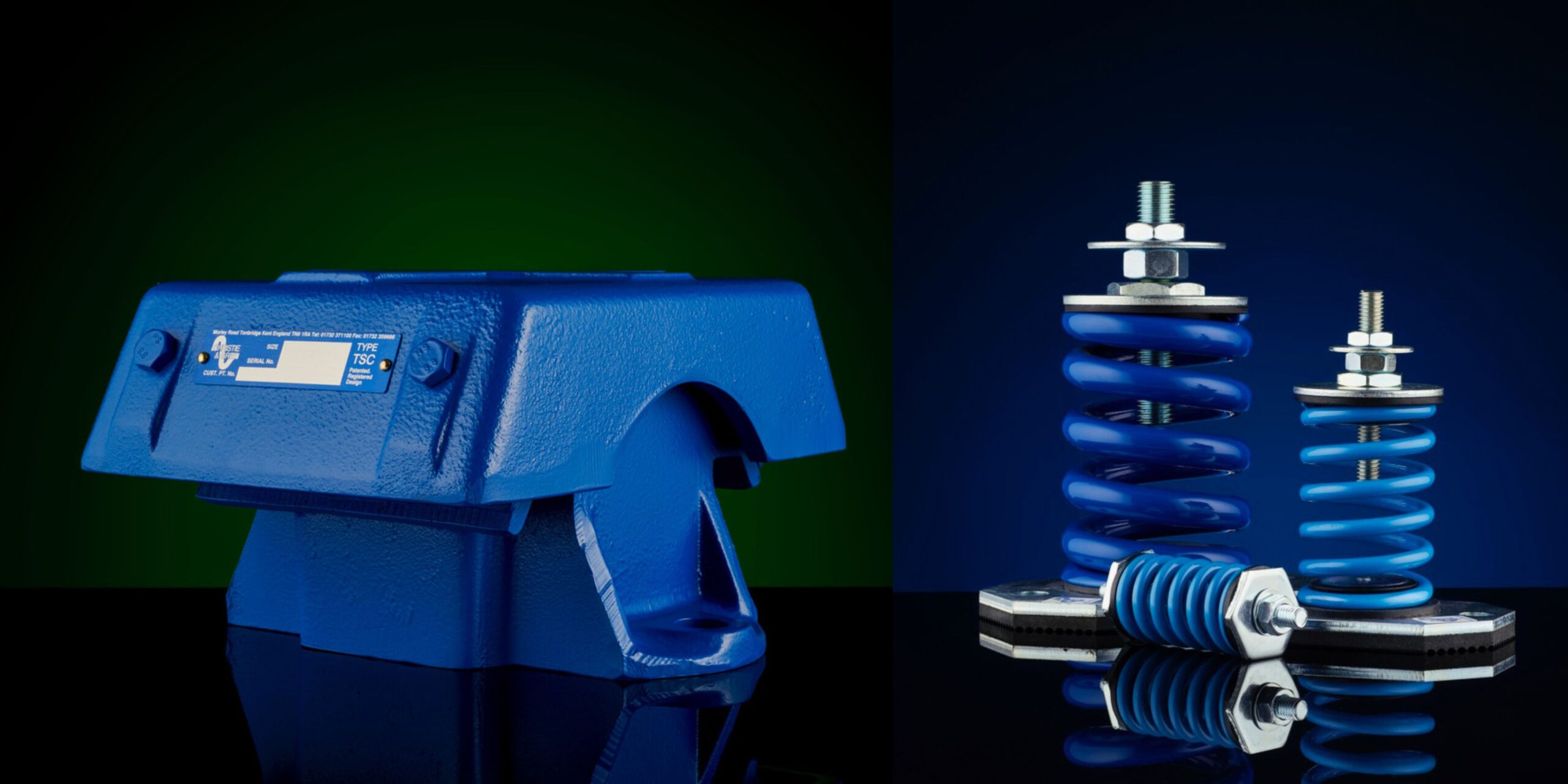
Choosing suitable anti-vibration mounts begins with a clear understanding of the equipment. Key factors such as machine weight, load distribution, vibration behaviour, and operating environment all play a major role in selecting the correct mount. The mounting configuration and support method also directly influence the choice of mount.
When correctly specified, anti‑vibration mounts do far more than simply reduce noise and vibration. They extend the service life of machinery, enhance operational reliability, create quieter/safer working environments and help avoid costly repairs or premature replacement. At Christie & Grey, getting the selection right first time is central to delivering long‑term value.
Understand Your Equipment Before Choosing a Mount
Before selecting anti-vibration mounts, it’s important to have a full picture of your machine’s specifications.
If the equipment has an offset centre of gravity, this should be clearly shown on a technical drawing, as uneven loading results in different point loads across the mount positions and may require mounts with varying rated capacities to ensure balanced performance. Certain machines, such as chiller units, go through significant weight changes during operation. In these cases, restrained mounts are often required to limit vertical movement.
Machines that generate lateral forces (e.g. centrifugal fans) place additional side forces on the mounts, which must be taken into consideration. In these cases, Christie & Grey typically recommends enclosed mounts, which offer enhanced resistance to horizontal forces due to their outer casing and rubber sleeve. It is also important to determine whether mounts must align with the existing fixing points or if new fixing locations can be introduced. Optimising load distribution in this way improves isolation performance and reduces variability across mount ratings.
Identify the Type of Vibration You’re Dealing With
Different machines produce different types of vibration, and each one requires a suitable isolation solution to prevent failure.
Where shock or intermittent impact loads are present, mounts incorporating rebound units provide an essential failsafe feature. For continuous vibration, understanding the operating RPM is critical, as isolation efficiency depends heavily on frequency.
Generally:
- High-frequency/High-RPM machines can be supported using stiffer mounts.
- Low-frequency/Low-RPM machines require softer mounts with a low natural frequency.
Mounts that are too stiff will transmit excessive vibration, while overly soft mounts may allow excessive movement and instability. Keeping the mount’s natural frequency well below the machine’s operating frequency ensures low transmissibility and prevents oscillation, which is essential in high-performance industrial vibration isolators. This allows vibration to be absorbed rather than passed into the building or supporting structure.
Choosing the Right Mount Type for Industrial Use
Different applications demand different mount types, and selecting the right industrial vibration isolators depends on the machine’s specific load and operating conditions.
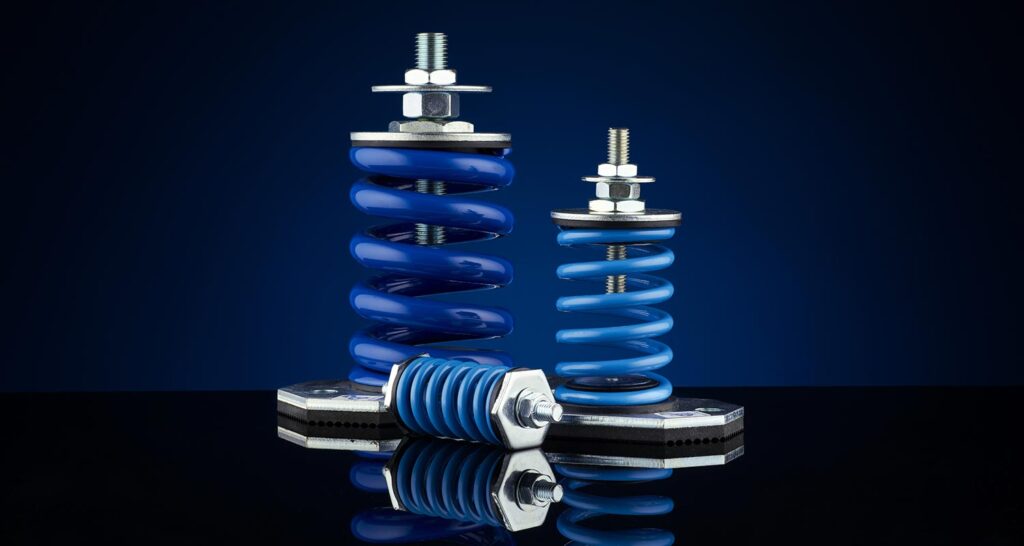
- Enclosed spring mounts are widely used for centrifugal fans and equipment that has limited exposure to outdoor conditions.
- Open restrained springs are ideal for machinery with large weight variations, such as chillers and cooling towers. They are also well-suited to rooftop installations and high‑rise buildings, where the lateral restraints prevent excessive movement during wind loads.
- Open spring mounts paired with dampers are ideal for low-frequency generators located in enclosed spaces where noise and movement need to be controlled.
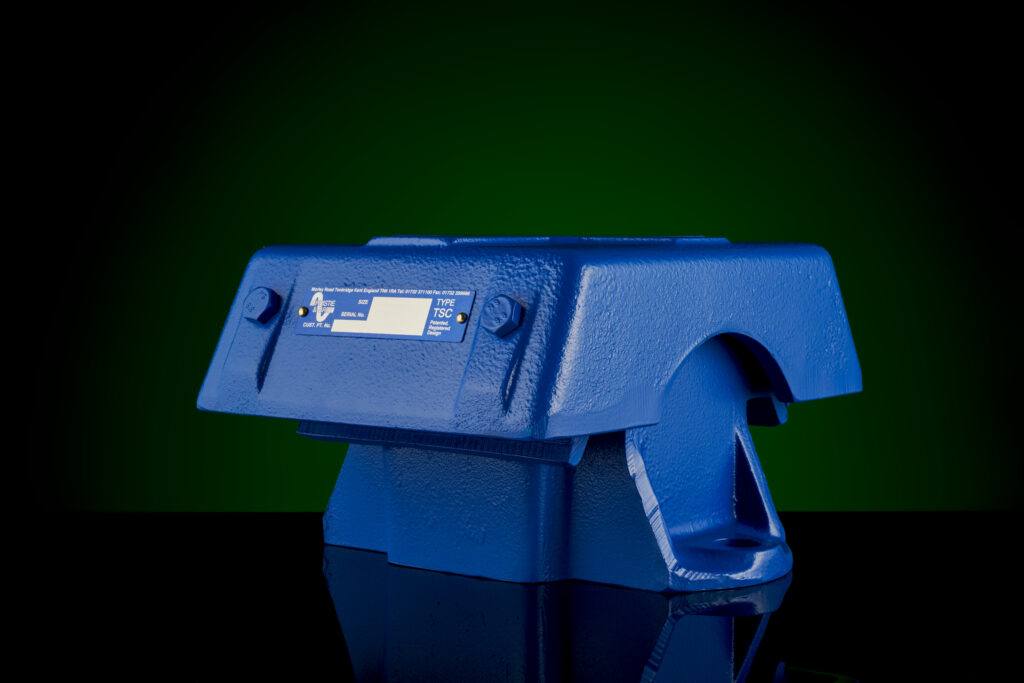
- TSC mounts are ideal for equipment with high static and dynamic loads, such as generators, and are capable of withstanding horizontal forces. They are also designed to resist industrial contaminants, including lubricants, cooling fluids, and oil spills. They provide effective low‑frequency vibration isolation and incorporate a rebound unit as an essential fail‑safe feature.
- For construction applications, we offer complete vibration and acoustic isolation solutions for floors (floating floors), walls (acoustic wall ties) and ceilings (hangers). Using Christie & Grey products, full “room‑within‑a‑room” constructions can be effectively achieved.
Each mount has its own advantages for different applications and should be selected in line with the machine’s overall specification and operating conditions.
Consider the Working Environment
The location and operating environment have a huge impact on mount selection, particularly for anti-vibration mounts used in harsh or exposed environments.
- Indoor vs outdoor: outdoor installations are subject to additional wind loading and rain, which can lead to corrosion if materials aren’t properly protected.
- Acoustic enclosures: Equipment inside an enclosure may only need standard open spring mounts, while rooftop installations exposed to wind loads often require open restrained springs with stainless fixings.
- Marine environments: Pitch and roll must be considered when selecting mounts for vessels, as these motions cause variations in the point loads, changes in natural frequency, add additional horizontal (shear) loads and increase the dynamic forces.
- Oil exposure: Rubber materials may require protective lacquers to prevent degradation.
- Water exposure: Where mounts are exposed to water, such as rain, stainless steel fixings should be used to significantly reduce the risk of corrosion.
- High temperatures: Some applications require heat-resistant solutions such as our captive rubber mountings, hangers and heat-resistant pads that are tested at 40°C ambient with an eyebolt at 400°C.
Common Mistakes and Practical Takeaways
To ensure the best possible isolation performance, avoid these common mistakes:
- Not providing the centre of gravity leads to inaccurate load distribution and mount selection.
- Omitting RPM information, even though it’s essential for calculating isolation efficiency.
- Choosing mounts based on price instead of suitability often results in higher long-term costs through failure or premature deterioration.
- Providing inaccurate, estimated or outdated equipment specs.
- Not detailing whether the equipment is floor-mounted or suspended.
- Assuming our base mounts can be used as wall mounts, even though they are designed for compressive loads only.
- Assuming mount selection is based on acoustic decibel requirements, selections are based according to the machine’s vibration characteristics and its weight/point‑load distribution, though they can also contribute to noise reduction.
Providing accurate information from the start helps us deliver the best service quickly and ensures you receive the most effective anti‑vibration mounts.
Final Thoughts
Mounting selection is ultimately about understanding the machine, the vibration profile, the mounting method and the environment in which it will operate. When these factors are evaluated correctly, anti-vibration mounts protect equipment, prevent premature deterioration, and minimise downtime.
If you’re unsure or need guidance, the Christie & Grey team is always here to help with professional assessment and expert recommendations for your application.
