112 Years of Christie & Grey: From a £100 Order to a Global Anti-Vibration Specialist
Where It All Began
It all started back in January 1912, when Robert Bertram Grey, a young qualified engineer from North Shields was appointed to manage two newly formed companies: The British Anti-Vibration & Noise Co Ltd and Typhoon Mixer Co.
Mr Grey worked single-handed from an office in Lloyds Avenue in the City of London, where most of the business was initially for the Typhoon Mixer Co. The company product was used for the mixing and agitation of liquid chemicals, employing a specially designed blade mounted on the end of a vertical shaft driven at about 90 rpm through a bevel gear system from a motor or belt driven horizontal shaft.
As the use of the mixing equipment developed, the ultimate product was the complete system, including the tank mainly for the extraction of tar from Benzine and Benzol by products from the Coke Oven process of steel manufacture.
Manufactured by W Towler & Son, the design and application of the equipment supplied by the Typhoon Mixer Co was carried out by Mr Grey and developed into a fantastic working arrangement over the years as the two companies worked together.
The £100 Order That Founded a Company
One of the first and, at that time, major applications of the natural cork isolation mat supplied by B.A.V & N was being negotiated by Mr Grey with Southend Corporation for the isolation of a foundation for a generating set to be installed at Southend Electricity Works. Around this time, in 1914, W Christie & Grey Ltd was set up.
The natural cork isolating mat had the trade name Bavanite, which was then changed to Coresil, its current name. This order was £100, with a projected profit of £26.25.
Building a Business
Whilst Mr Grey worked to establish the British Anti-Vibration & Noise Co, the Typhoon Mixer Co continued to build a steady client base, including Yorkshire Tar Distillers, steel manufacturers Colvilles, British Aluminium, and County Perfumery, manufacturers of Brylcreem.
Growing the vibration control side of the business proved a harder task. Christie & Grey were among the first companies in the UK to build a business through cold selling, and there was little demand for it. Machine speeds were far lower than they are today, so problems caused by vibration were less likely to appear, with manufacturers often insisting that their compressors and engines “ran like sewing machines” and had no need for anti-vibration solutions.
As interest in the company’s work slowly grew, a range of standard anti-vibrators was developed to meet the demand, alongside special designs for individual applications, including punching and perforating machinery installed at the Department of Stamping in Somerset House.
Trusted by the Bank of England, the BBC and Harrods
By the mid-20th century, Christie & Grey’s client list had grown to include some of the country’s most recognisable names. The Bank of England, the Post Office, the BBC and Harrods turned to the company for generating set isolation, while Selfridges relied on it for air conditioning equipment as well as generating sets. The Ministry of Works (later part of the Department of the Environment) was also among its clients.
Coresil isolation systems found their way beneath the rotary printing presses of several major UK newspapers, including the Daily Telegraph, the Financial Times, the Daily Express, the Derby Telegraph and the Manchester Evening News. The company’s reach extended well beyond the UK too, with Coresil-isolated foundations installed in India, Australia, New Zealand, Holland, Germany, Egypt, Spain, Portugal, South Africa and Norway.
The Move Into Marine Vibration Isolation Systems
Marine engineering wasn’t part of Christie & Grey’s original plan, but it soon became one of the company’s most demanding specialisms. At the time, little was known about how flexibly mounted machinery would behave under the constant motion of a vessel at sea, and the range of isolation equipment available was limited to helical springs, laminated springs and natural cork pads.
The company then took on the design of a vibration isolation system for the diesel generating sets aboard the Scottish island ferry Loch Nevis. The system included a mechanism allowing the isolators to be bypassed entirely, locking the sets solidly to the ship’s structure in heavy seas. During trials, the results initially looked nothing like what had been predicted, until it was discovered the locking mechanism was still engaged. Once released, the difference was dramatic, and the system performed exactly as designed.
The Loch Nevis project marked the beginning of a marine specialism that remains central to Christie & Grey’s work today.
Evolving the Product Range: Rubber Mountings and Air Spring Systems
By the 1950s, Norman Hall, who would later become Chairman, recognised that cork and steel spring isolation alone would no longer be enough to compete, as rubber mounting technology advanced. He negotiated an agreement with Dunlop Special Products to bring their range of rubber-to-metal bonded mountings and rubber carpet mountings into the Christie & Grey range, with Dunlop supplying the full technical information whilst Christie & Grey were responsible for application.
In 1959, Dunlop acquired the John Bull Rubber Co, which included Metalastik Ltd, one of Christie & Grey’s major competitors, and manufacture of the Dunlop range moved to Metalastik in Leicester. Following further negotiations, the agreement was transferred and extended to include a large part of Metalastik’s own product range too.
The Dunlop relationship enabled Christie & Grey to develop the Pneuride system of vehicle air suspension for industrial applications, with a patent on the combined use of air springs and steel springs held jointly by both companies. The company went on to design, supply and install some of the largest air spring installations in the UK, including strong floors at Imperial College London, and seismic testing facilities at the National Engineering Laboratory in East Kilbride.
From Lloyds Avenue to Tonbridge
Christie & Grey operated from its original Lloyds Avenue offices until 1968, when the company moved to Finsbury Square on the northern edge of the City. In 1974, the company relocated again, to leasehold office and factory premises on Sovereign Way, Tonbridge. This marked the first time in its history that the company took direct control of manufacturing and assembly, which had previously always been carried out on a sub-contract basis.
Hong Kong Contract and a New Chapter
In 1983, Christie & Grey won a major overseas contract as the specialist noise control and vibration isolation partner for the Hong Kong Academy for Performing Arts, built by the Royal Hong Kong Jockey Club to mark its centenary and donated to the Hong Kong government. The profit generated between 1983 and 1986 gave the company the means to purchase its own freehold offices and factory on Morley Road, Tonbridge, the site it still operates from today.
Ted Sims, who had joined as a draughtsman in 1948, became Chairman and Managing Director following Norman Hall’s death in 1983, retiring in 1986. That year, Nick Maw was appointed Chairman and Jerry Whitehead Managing Director, and the two completed a management buy-out of the company from its previous owners, principally members of the Grey family. The company’s name was subsequently shortened to simply Christie & Grey Ltd.
Christie & Grey Today
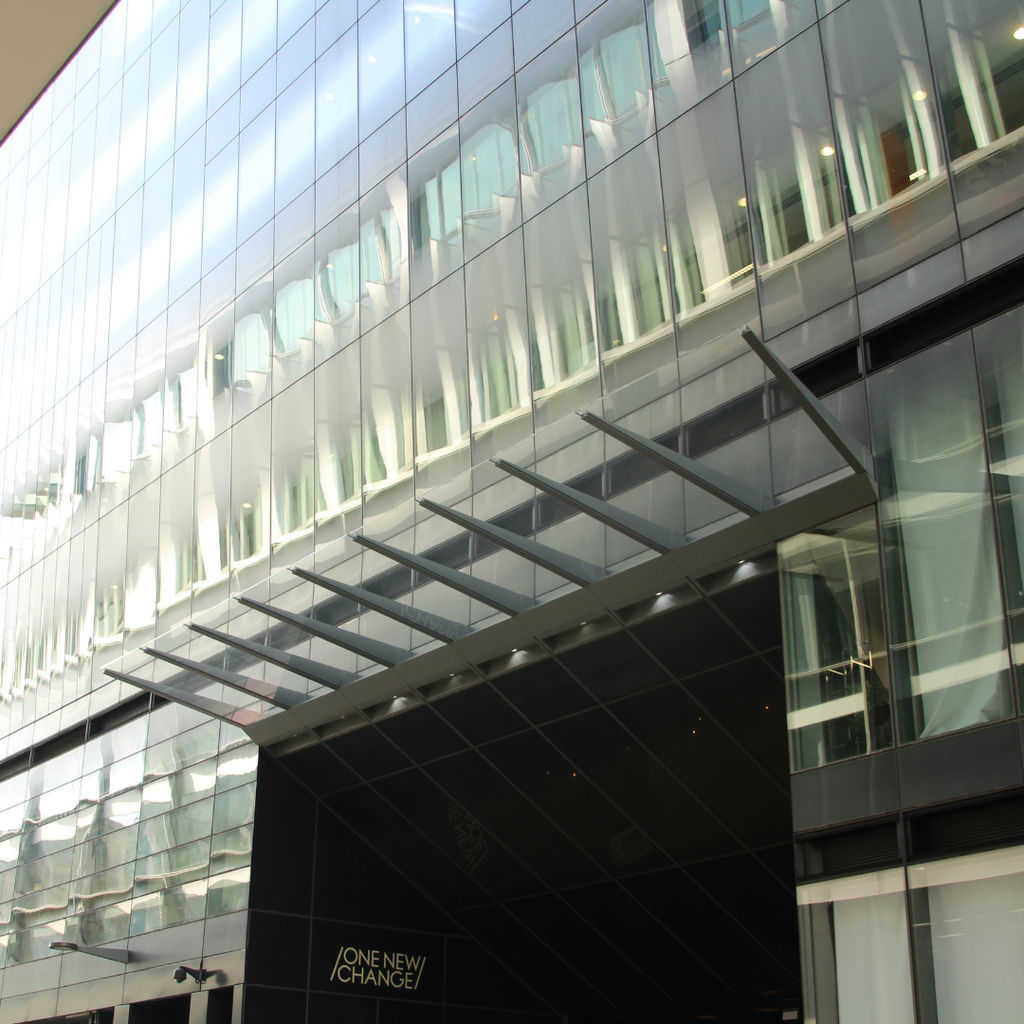
More than a century after Robert Bertram Grey negotiated that first £100 order, Christie & Grey’s engineering reach spans marine, construction and industrial sectors around the world. Recent projects include vibration isolation systems for the M/V ACBL Mariner, the most powerful and capable towboat ever delivered to the U.S. inland river system, the Staten Island Ferry, built to serve millions of passengers for years to come, and the research vessel Sally Ride, equipped for deep-sea ocean mapping. Seabulk Towing and the San Francisco Fire Boat continue the marine tradition the Loch Nevis began, while projects like One New Change, a 560,000 sq ft office and retail development in the heart of London, show the same expertise applied to major construction developments.
112 Years On
From a cork mat under a generating set in Southend to isolation systems on research vessels built for deep-sea mapping, the engineering problem Robert Bertram Grey set out to solve in 1914 hasn’t changed. What has changed is the scale, the materials, and the precision available to solve it.
112 years on, Christie & Grey continues to design and deliver anti-vibration solutions for clients across marine, construction and industrial sectors worldwide.
If you’re facing a vibration or noise control challenge, get in touch with our team today.
FAQs
Who founded Christie & Grey?
Christie & Grey grew out of the work of Robert Bertram Grey, a qualified engineer from North Shields who was appointed in 1912 to manage the British Anti-Vibration & Noise Co and the Typhoon Mixer Co. W Christie & Grey Ltd was set up in 1914, around the time of an order to isolate a generating set foundation for Southend Corporation.
Why is it called Christie & Grey?
The company was named after W Christie, who held 99 of the original 100 shares, and Robert Bertram Grey, who held the other one. After Christie resigned in 1923, Grey and his wife bought his shares, and “W” was dropped from the name after the 1986 management buy-out.
Where is Christie & Grey based?
The company is based in Tonbridge, Kent, at a freehold site on Morley Road bought with profits from the Hong Kong Academy for Performing Arts contract.
What is Coresil?
Coresil is Christie & Grey’s natural cork isolation mat, originally supplied under the trade name Bavanite, after the British Anti-Vibration & Noise Co. It remains part of the company’s product range today.
What industries does Christie & Grey work in?
Christie & Grey provides anti-vibration and noise control solutions across marine, construction and industrial sectors, with projects ranging from ferries and research vessels to major building developments.
What is vibration isolation?
Vibration isolation reduces the vibration passing from a machine into the structure it sits on, using materials such as cork, rubber and springs.
