Traceability You Can Trust: The Story Behind Every Christie & Grey Serial Number
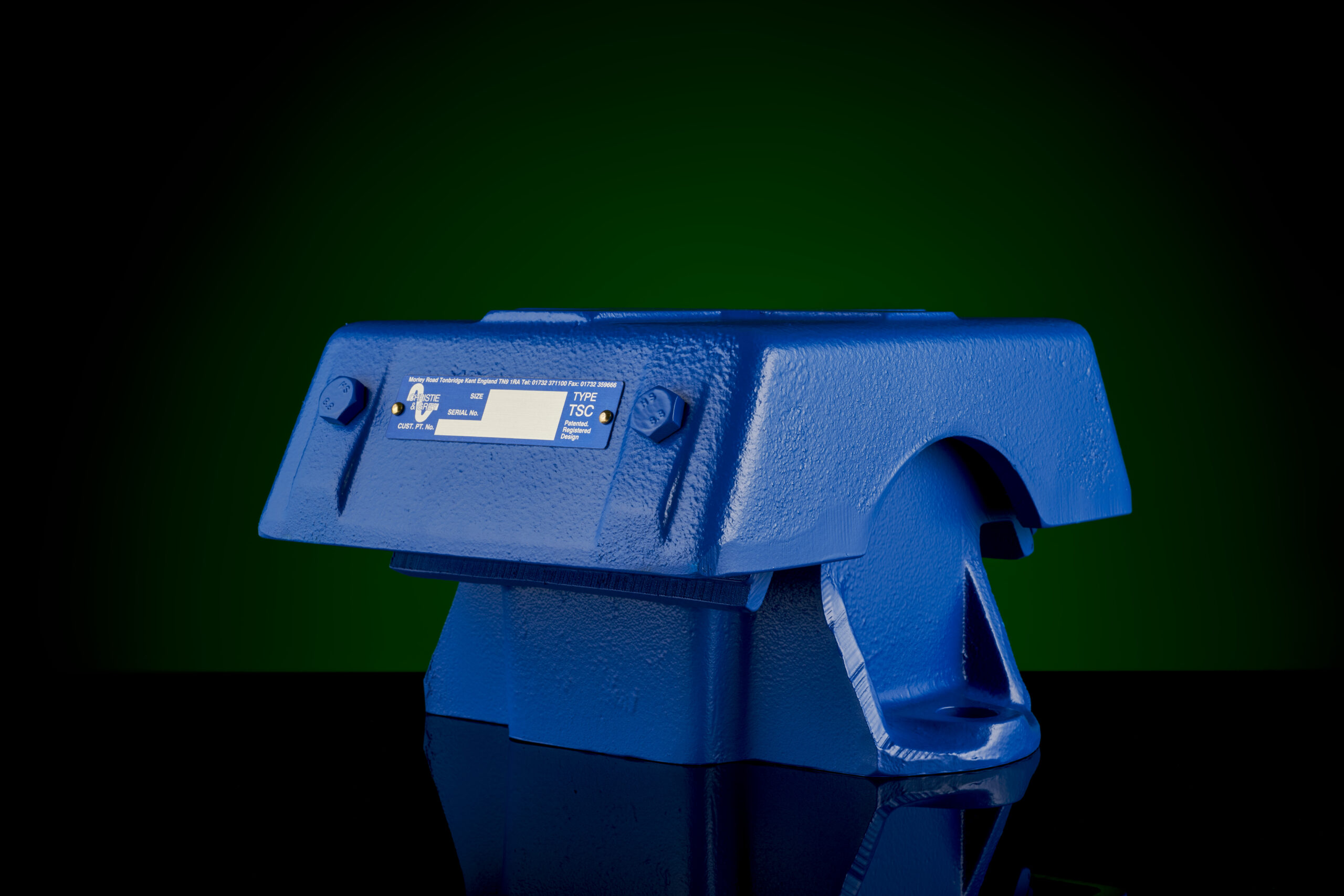
A customer gets in touch with a photo of a serial number, for a mount that has been in service for 20+ years, and they need a replacement. To some engineering companies this may be a long shot, but to Christie & Grey, it’s a routine enquiry backed by real engineering support.
Our marine products each carry a serial number. It may be a small detail, but it sits at the heart of how we support our customers, not only years, but often decades after a product leaves our workshop.
Here’s how it works, and what it means for the support you receive.
How serial numbers work
As part of our system quality service, most of our marine mountings, including TSCs and Genflex mounts, are fitted with a nameplate. This nameplate identifies the mount’s part number alongside its unique serial number.
Every product is tested and fitted with a serial number before dispatch. Traceability isn’t an add-on for us; it’s built into the process from the point of manufacture, so that each product leaving our workshop has an identifiable record attached to it.
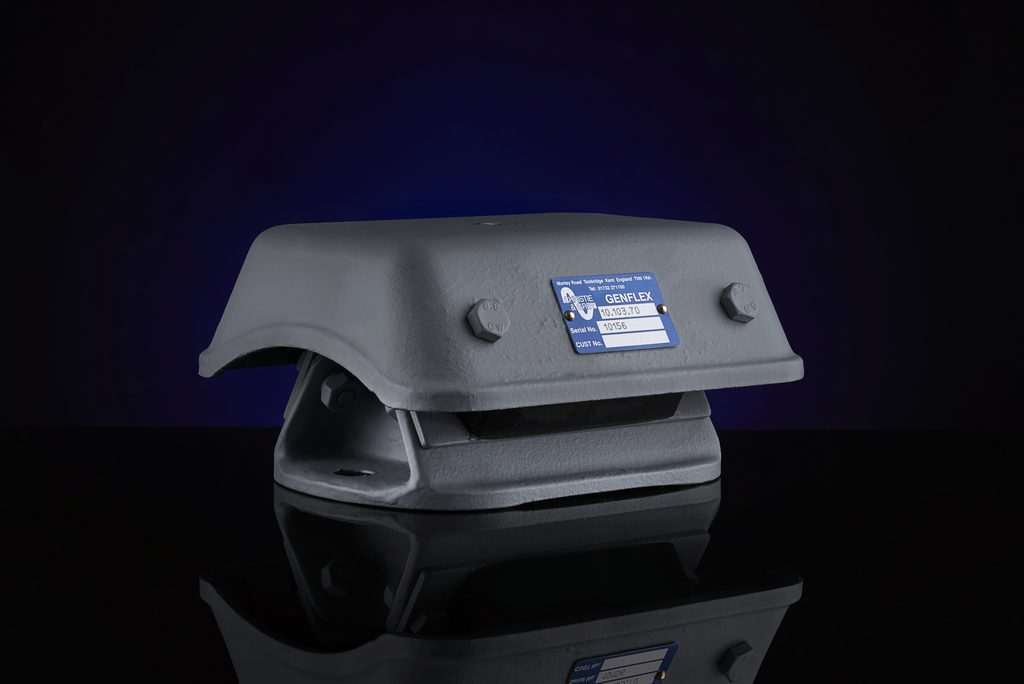
Built for customisation, traced to the exact build
Our products make use of modular construction and parts commonality. Individual components are brought together and calibrated in-house at our workshop, and combining these components in different ways allows us to cover a broad range of requirements from a common set of parts.
This modular approach, alongside equipment-specific engineering, also allows for significant customisation tailored to a specific project, all within a standard dimensional envelope and model-specific maintenance standards that stay simple for customers to work with. It’s a way of containing costs while still supplying the most effective product for each application.
This is where the serial number does more than identify a product; it unlocks the customisation. Because every serial number is traceable back to the exact build, we can ensure that any replacement part supplied is an exact duplicate, calibration and all, rather than a generic equivalent.
What information is actually recorded
Behind every serial number sits a number of records:
- Customer name
- Order number and date
- Serial number itself
- Quantity supplied
- Part number of the product
Together, these details form a complete picture of exactly what was supplied, to whom, and when, making future identification possible.
Where this data lives: today and 20+ years ago
Current records are held in our quality system records on a shared drive, which our engineering team can easily access. Older records, going back over 20 years, exist as physical paper copies in our archive room.
Consistency runs through this approach, regardless of how record-keeping technology has changed. Whether the record is digital or on paper, the same principle applies. If a product was supplied by us, we can find it.
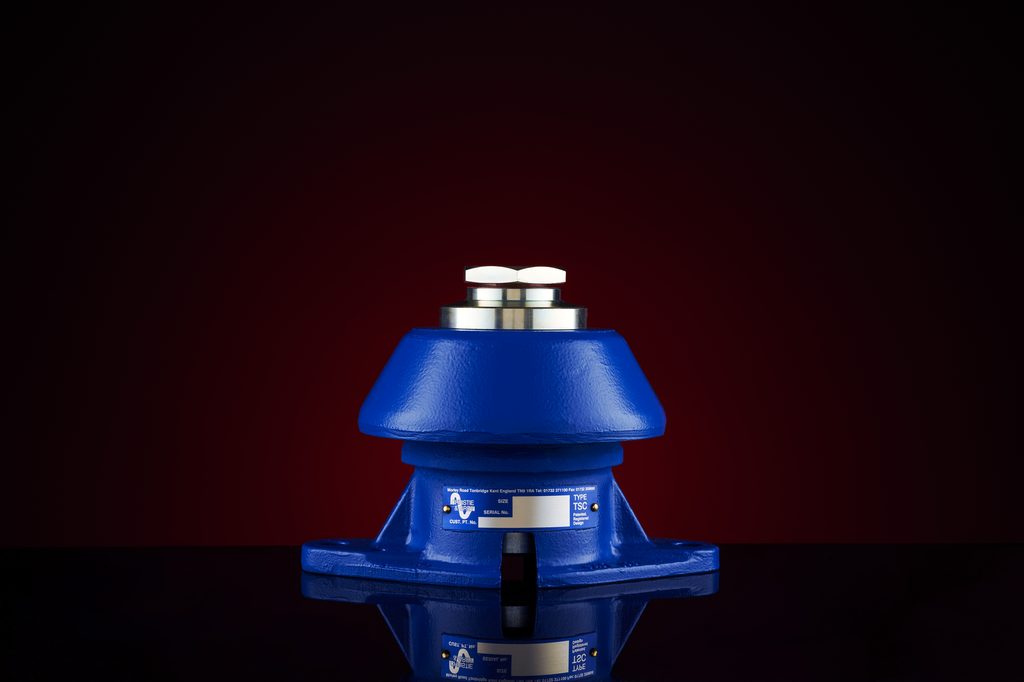
Real traceability in action
We regularly receive serial numbers and photographs of nameplates from customers asking for replacement parts. Occasionally, these are for mounts supplied more than 20 years ago.
Once we have the serial number, the process is straightforward. Our team goes through the records, digital or archived, to trace it back to the correct part number and confirm the original customer it was supplied to. From there, sourcing or manufacturing the right spare part for marine mountings becomes a simple process.
It’s worth noting that a single application may use more than one part number, so where an installation has multiple mounts or isolators, we’d always recommend reporting every serial number present rather than just one. This ensures each individual component is matched correctly, rather than assuming one part number applies across the whole installation.
What’s new: QR codes on product labels
Alongside our existing serial numbers, we’re introducing new labels featuring QR codes.
Scanning the code takes you right to the relevant product page, for example an Enclosed Spring Mounting or a TSC T10. This allows you to quickly confirm exactly what type of product you’re looking at, and browse the correct product leaflet and specifications.
Note that the QR code is not the same as the serial number. Its purpose is to help identify the type of product, not to trace the history of an individual unit. Both customers and engineers in the field can benefit from it as a fast way to confirm what they’re looking at and pull up the right documentation.
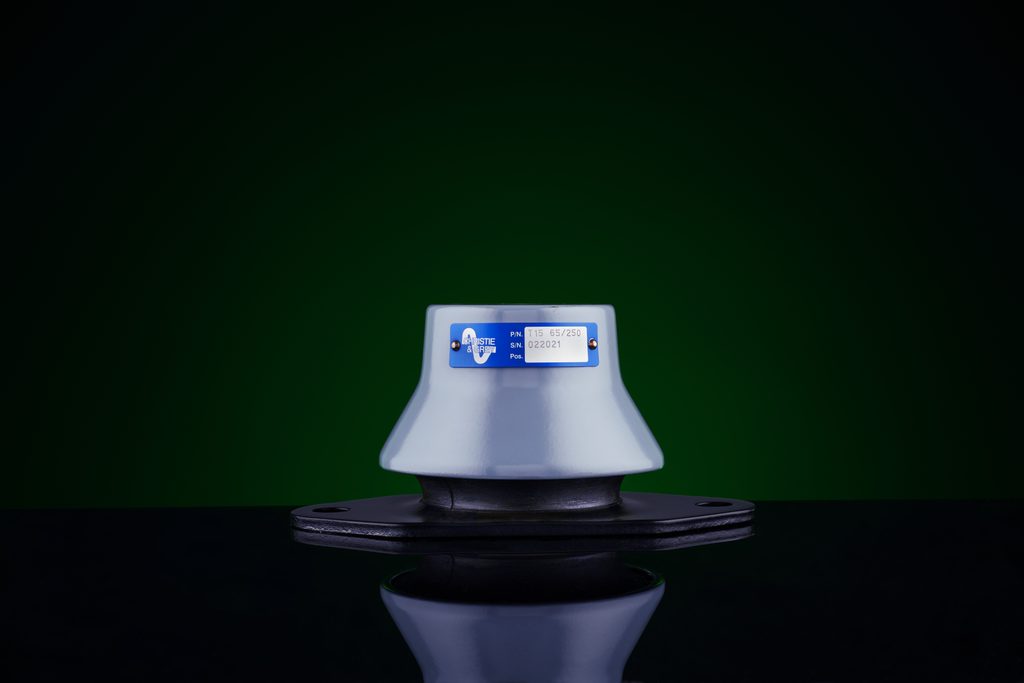
Why this matters for customer support
Traceability is directly tied to how quickly and effectively we can help. When a customer provides a serial number, it allows us to confirm who the product was supplied to, when it was supplied, and the correct part number.
This becomes especially powerful when serial numbers are recorded against their specific location on a piece of equipment. Combined with field readings, such as isolator heights, and our factory calibration data, this location-specific traceability gives our engineers a precise picture of how a system was originally set up, not just what parts were used.
Delays and back-and-forths that come with guesswork are avoided entirely when we get the exact right part, first time. Behind the scenes, this kind of technical support has a real impact on how quickly a customer gets back up and running.
Is this standard practice?
In today’s marine industry, traceability of this kind is fairly common with manufacturers. But it wasn’t always standard practice. Because we’ve maintained detailed records for decades, we’re able to trace and support products that were supplied long before traceability became an industry expectation.
The value of a small number
A serial number might look like a small detail stamped onto a nameplate. In reality, it’s a direct line back to decades of records, and it’s what allows our engineering team to offer support that’s fast, accurate, and genuinely backed by historical data.
So if you’re ever in need of a replacement part, check the nameplate on your mount. The serial number could be all we need to identify exactly what you have and get the right replacement for you. And keep an eye out for our new QR-coded labels, designed to make identifying our products even easier.
Get in touch
Found a nameplate on one of your mounts and want to know more? Send a photo of the serial number, along with any details you have, and we’ll trace it back to confirm the part and help arrange a replacement marine mount part where needed. Contact our engineering team to get started.
FAQs
What if the nameplate is worn or the serial number isn’t fully legible?
Even a partial serial number, or a clear photo of the nameplate alongside details like the mount’s approximate age or the vessel it’s fitted to, can often be enough for our team to narrow down the records and identify the correct part.
Do all Christie & Grey products carry a serial number?
Serial numbers are standard across most of our marine mounting ranges, including TSCs and Genflex mounts. If you’re unsure whether a specific product you own carries one, our team can confirm this for you.
I don’t have the original order paperwork or purchase details. Can you still help?
Yes. The serial number itself is usually enough to work from. Our records are built around it, so you don’t need to track down old invoices to get a replacement sorted.
How long does it typically take to trace a product and get a replacement?
This depends on how far back the record goes and whether it’s held digitally or in our archive. Digital records are usually quick to check; older paper archives can take slightly longer.
Can this level of traceability support compliance, survey, or classification requirements?
Because our records confirm exactly what was supplied, when, and to whom, they can be a useful reference point for documentation requested during vessel surveys or inspections. Get in touch with our team if you need this kind of confirmation.
Does this service extend to customers outside the UK?
Yes. Wherever a Christie & Grey product has been supplied, the same serial number and records apply, so international customers can request tracing and replacement parts in exactly the same way.
My equipment has more than one mount or isolator. Do I need to provide more than one serial number?
Yes. If you’re able to, please provide the serial number for each part. Since a single installation can use more than one part number, reporting all of them helps us match every component correctly rather than assuming they’re identical.
